Amsterdam
This project includes selected healthcare product design work. Please enter the password to continue.
Amsterdam
I drive the vision and strategy of product design, ensuring alignment with business goals while maintaining consistency across platforms through robust design systems. I lead the end-to-end design process from research, ideation, and prototyping to final delivery, creating intuitive, accessible, and scalable user experiences. I collaborate closely with product managers, engineers, and stakeholders to define requirements and deliver impactful solutions, while also mentoring junior designers and facilitating workshops to foster creativity and collaboration. I conduct and synthesize user research, translate insights into actionable improvements, and validate design decisions with data. I establish best practices, workflows, and documentation to ensure efficiency, compliance, and high-quality output. As a strong advocate for design, I communicate and defend design decisions to stakeholders, explore emerging technologies such as AI and AR/VR for innovation, and continuously refine processes to deliver faster, more effective, and user-centered solutions.
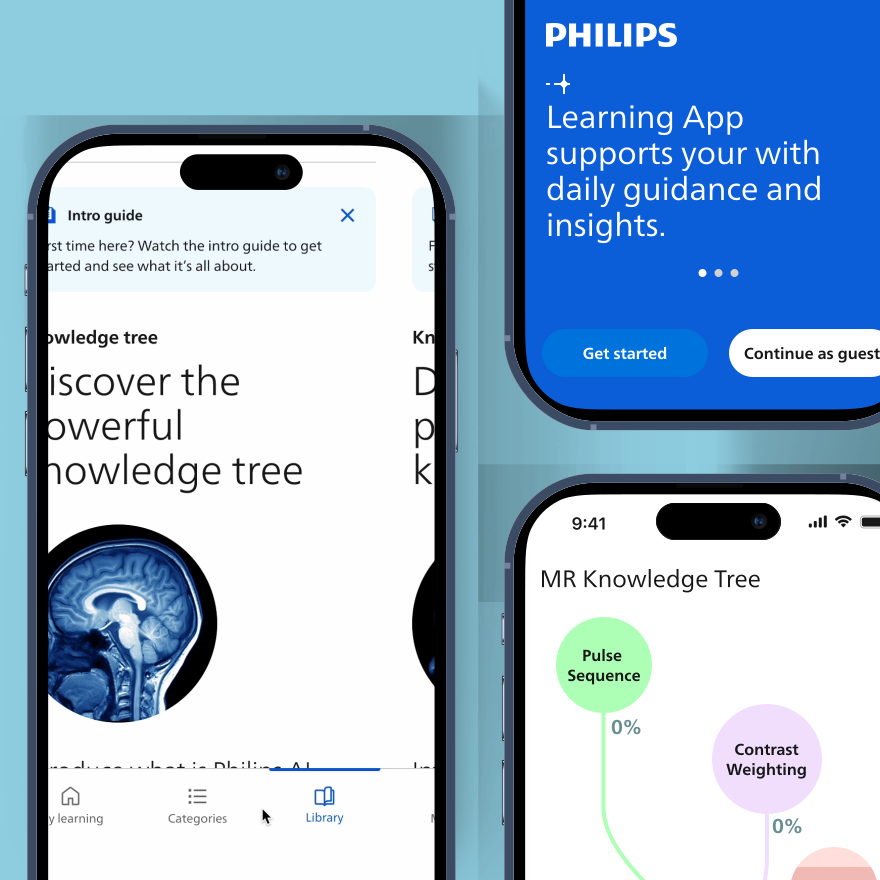
The project highlights the importance of clinician education after the handover of Philips products and technologies. It begins with key questions: How does limited clinical support affect technology use and customer loyalty? Do clinicians understand the system’s value, available support, and workflow fit—and have they been properly onboarded? The central message emphasizes the need to design for ongoing clinician education post-handover to both support and promote Philips products and technologies. Additionally, it stresses that to enable clinician-focused learning, Philips must strengthen key capabilities within business units to create valuable, impactful learning solutions.
Chronic condition management creates a significant burden on patients, providers, and systems. Annual spending on chronic condition management accounts for 90% of overall healthcare costs in the United States. Remote patient monitoring is changing the way clinicians approach care delivery, and may strengthen patient engagement. Patients engaged in remote patient monitoring programs may see reduced hospitalisations, shorter hospital stays, better health outcomes in rural areas, and better preventative management for chronic conditions.
* IF Design Award Winner 2024
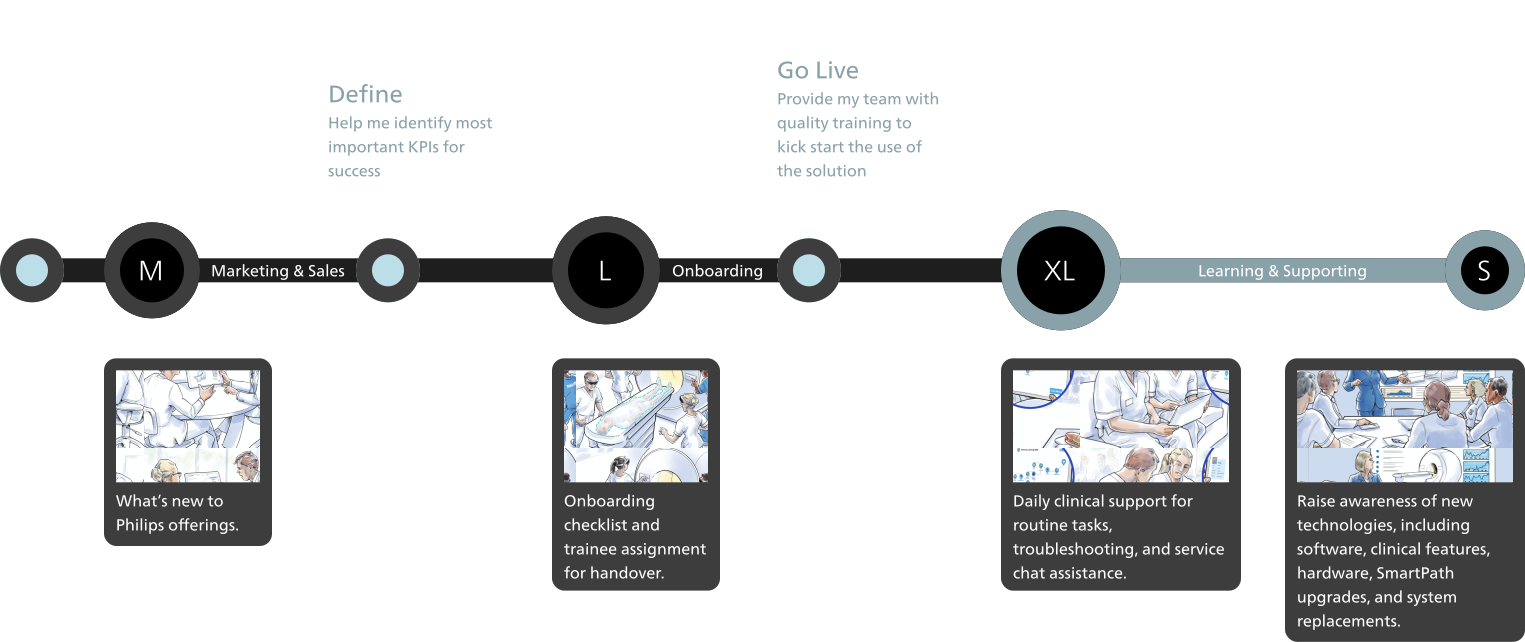
There is a growing need for continuous education for clinicians after the handover of Philips products, requiring a scalable education service that helps unlock the full value of our solutions. To build a strong foundation for clinician-focused learning, we must grow our capabilities in key areas: enabling digital self-learning for independent, on-demand education; ensuring a seamless experience across tools and platforms; establishing a robust content management system to deliver high-quality and consistent materials; providing omnichannel access for flexible learning anytime, anywhere; integrating customer feedback to refine and improve learning experiences; and leveraging data-driven personalization to tailor content to user roles, behaviors, and performance. Together, these capabilities will empower business units to create impactful learning applications and features that deliver meaningful value to our customers.
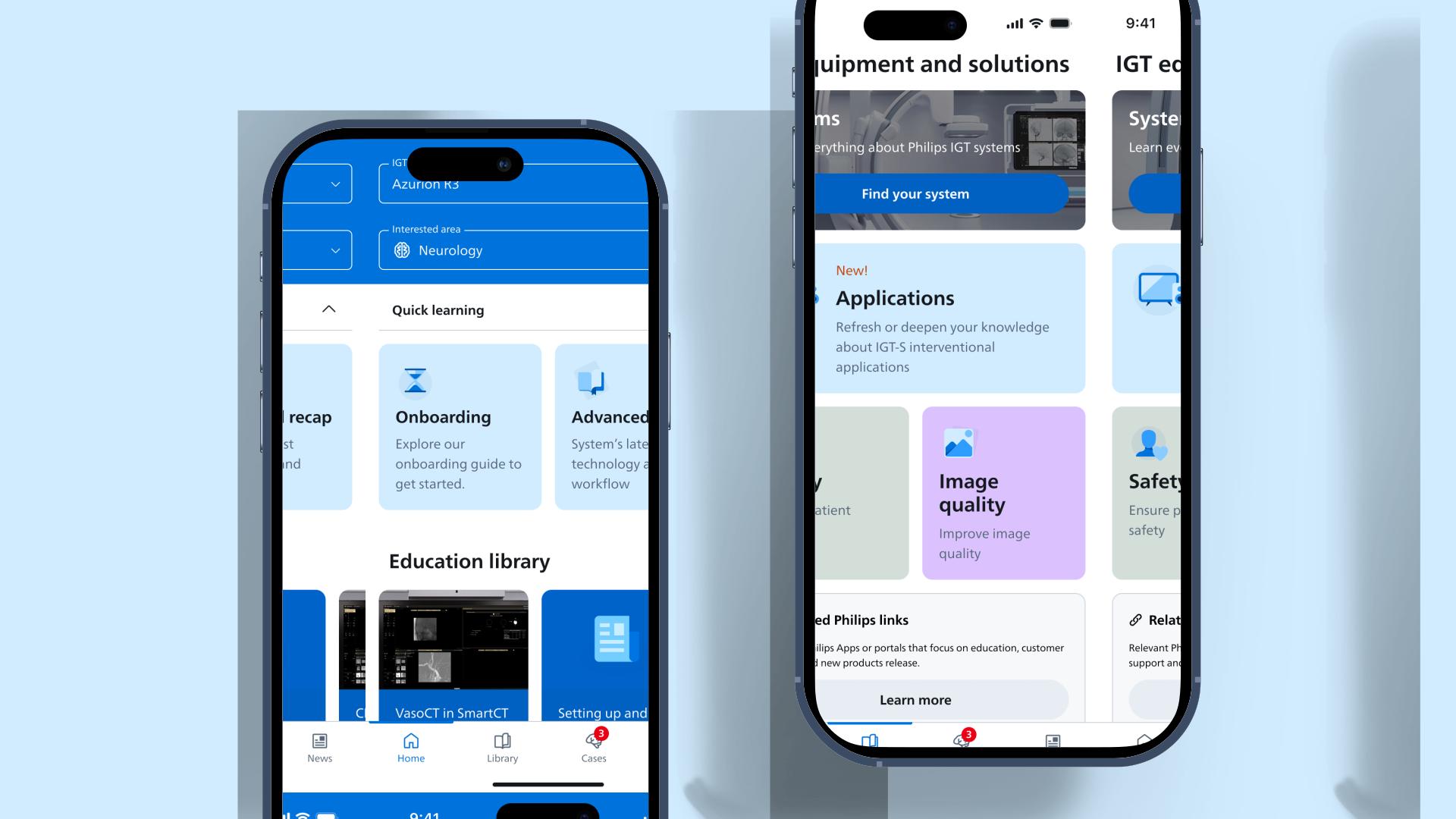
The app provides personalized, system-specific learning resources, helping clinicians quickly access relevant training, safety guidelines, and imaging optimization content. It blends usability with a clean, modern design to support ongoing education.

This knowledge tree visualization provides an intuitive, gamified way for radiographers and clinicians to explore MRI concepts, monitor progress, and engage with complex content in a structured and motivating manner.

These screens demonstrate how the app combines structured learning content (library overview) with detailed, advanced modules (SmartSpeed AI) to help clinicians understand both foundational concepts like k-space and cutting-edge innovations like AI-powered acceleration in MRI.
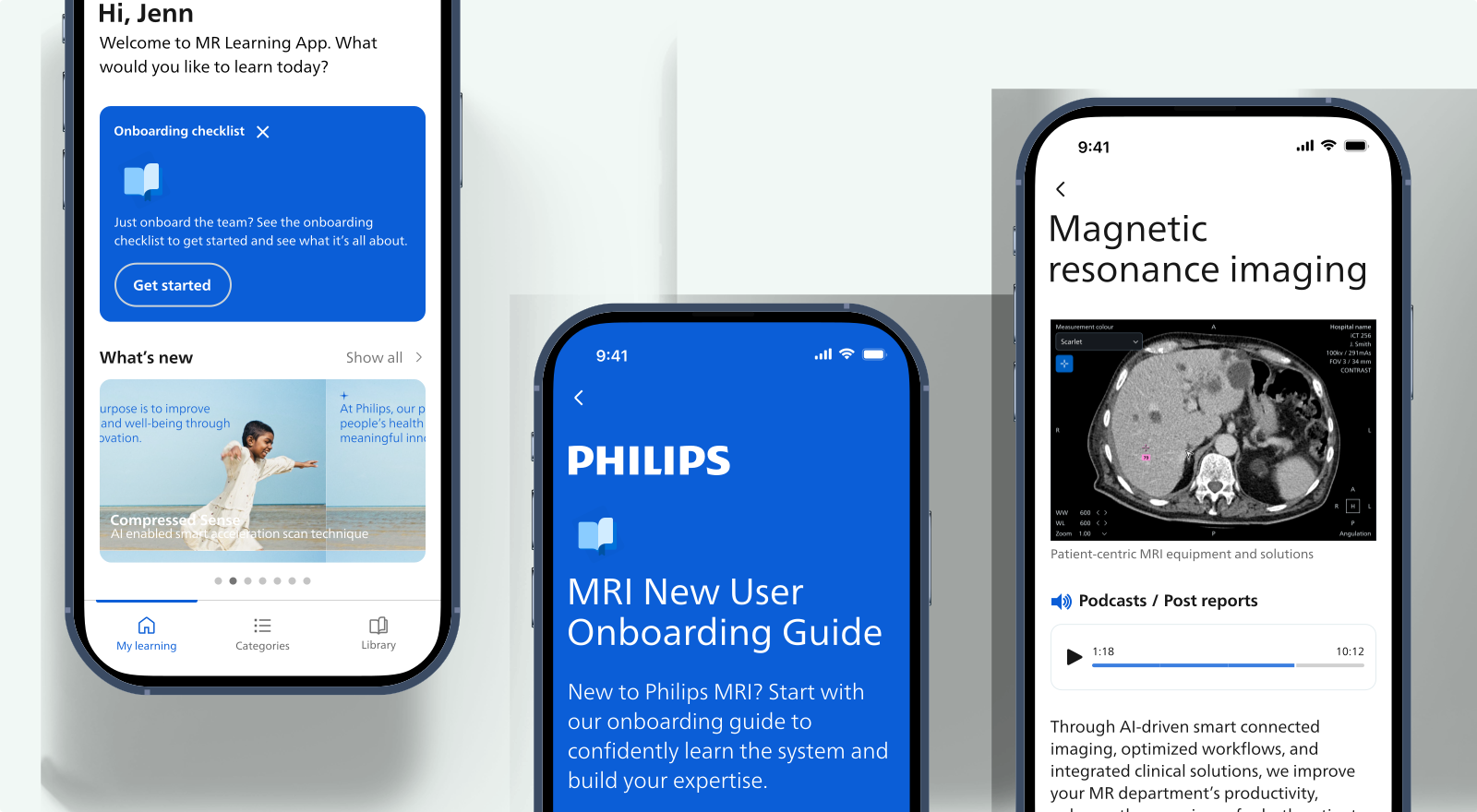
This design demonstrates how the app blends onboarding support, structured guidance, and multimedia learning to help clinicians and radiographers effectively understand and use Philips MRI systems.

This interface is designed for quick issue reporting and guided troubleshooting, helping users communicate problems efficiently and potentially receive tailored support or automated solutions directly within the app.
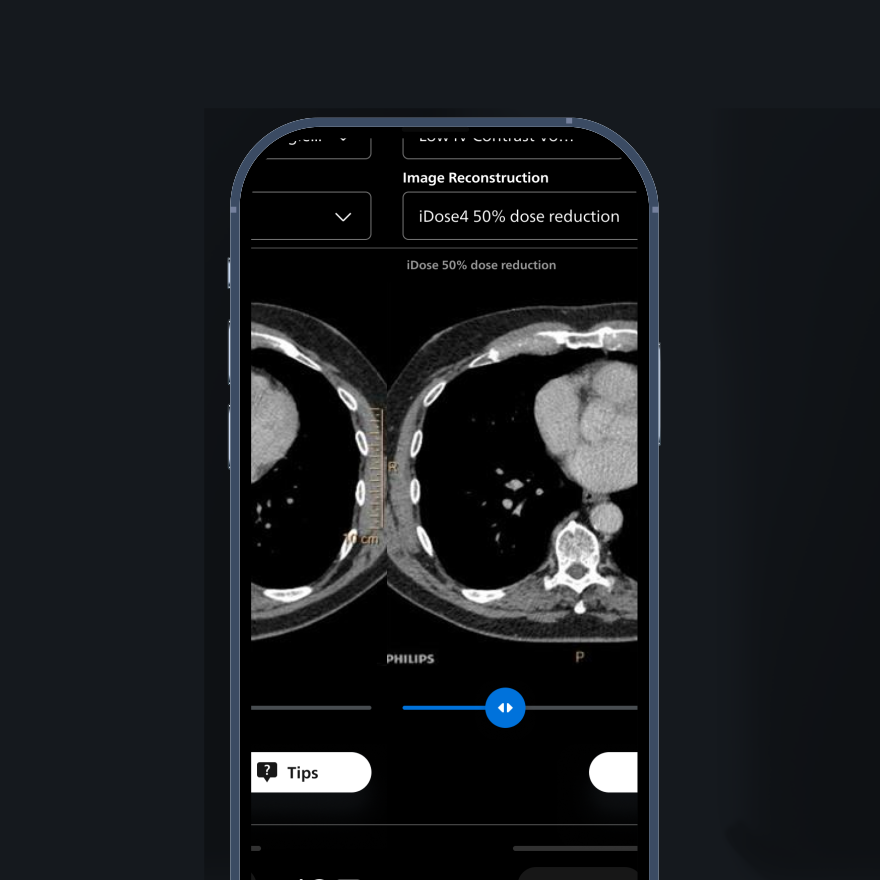
This design emphasizes real-time issue reporting, collaboration between clinicians, biomedical engineers, and Philips support, and ensures urgent patient-related issues are escalated immediately.
Remote patient monitoring is changing the way clinicians approach care delivery, and may strengthen patient engagement. Patients engaged in remote patient monitoring programs may see reduced hospitalisations, shorter hospital stays, better health outcomes in rural areas, and better preventative management for chronic conditions.

This app provides personalized health tracking, helping patients monitor vital signs, manage chronic conditions, and stay on top of health-related tasks and surveys.

Together, these screens highlight the app’s role in remote patient management, combining secure login, structured symptom tracking, and integration with connected health devices for accurate and timely monitoring.
Design has become a key stakeholder in the RPM business, building holistic experiences that connect patients with clinicians and successfully launching the mobile app from scratch. By creating a dedicated design system for RPM and integrating seamlessly with development through standard tokens, design not only shapes user experiences but also connects directly to code. This subset of the Philips DLS ensures efficiency, consistency, and positions design as an equal product stakeholder.
